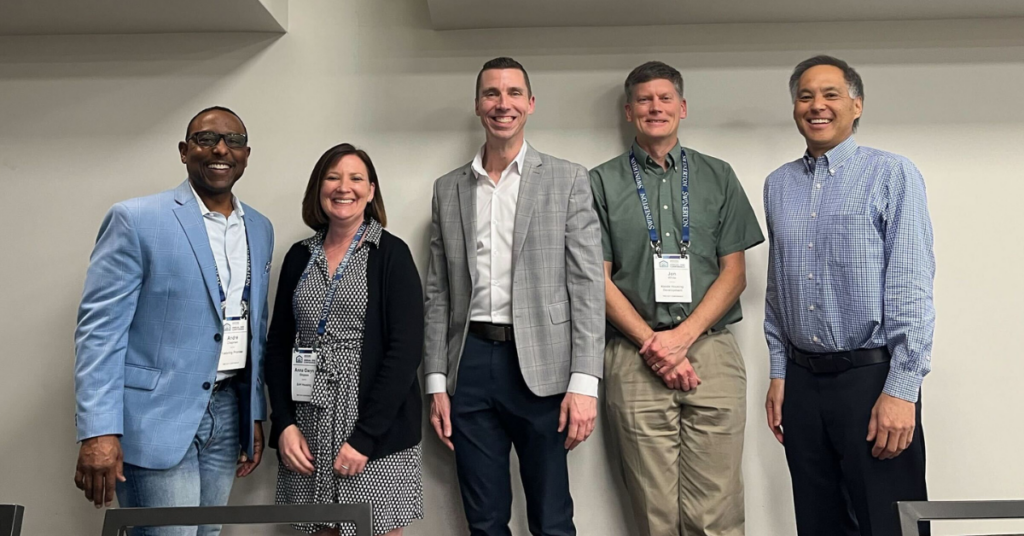
SV@Home convened a panel at Housing California’s 2026 Conference exploring what it takes to effectively house transition-age youth, highlighting real-world projects and cross sector partnerships.
At Housing California’s 2026 Conference, SV@Home brought together leaders from across the affordable housing space to dig into a question that is often easier asked than answered: what does it actually take to house transition-age youth (TAY) well? Moderated in partnership with Fostering Promise, the panel featured speakers from Abode Housing, EAH Housing, Jamboree Housing, and Bill Wilson Center, each bringing firsthand experience from projects serving youth exiting foster care and those at risk of homelessness. The conversation went beyond production numbers, focusing instead on the real work behind the scenes, how these developments are designed, financed, and operated to support young people navigating the transition to independence.
Grounded in real-world examples like Parkmoor Community Apartments in San José, intergenerational housing in Emeryville, and adaptive reuse efforts like Sunrise Pavilion, the discussion highlighted a range of approaches tailored to this population. What tied them together was a shared understanding: housing TAY isn’t just about delivering units, it’s about building a system of support. These communities pair deeply affordable homes with on-site services, mentorship, and workforce development, creating environments where residents can stabilize and learn. Panelists emphasized that getting this right starts early, with strong coordination between developers, service providers, and public agencies, and continues through design decisions that intentionally center youth voice and lived experience.
What came through clearly is that this work sits at the intersection of complexity and opportunity. Delivering housing for TAY requires navigating layered funding sources, aligning referral systems, and designing spaces that foster both independence and community. But when those pieces come together, the impact is significant, creating not just housing, but pathways to long-term stability. As communities across California continue to look for solutions, these models offer a clear takeaway: when we invest in thoughtful partnerships and intentional design, we can deliver housing that truly meets people where they are, and helps move them forward.
Stay connected as we continue to elevate solutions for transition-age youth, and join us in advocating for housing models that pair affordability with the services and support needed to ensure long-term success.