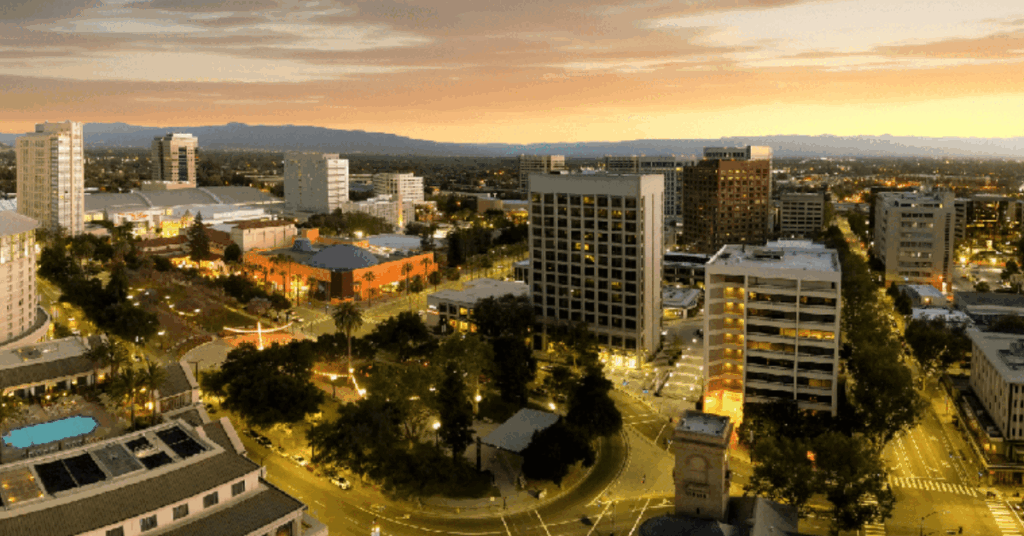
Across Santa Clara County, cities are using tools like specific plans, area plans, and urban village strategies to determine where and how new housing can be built. This piece highlights the major plans adopted in 2025, the next wave of plans moving forward, and the key moments where public engagement will shape the future of growth.
The Planning Tools Being Utilized Across SCC
Plan Areas—like Specific Plans, Area Plans, and Station Area Plans—set the rules for where homes, jobs, and services can go, making them some of the most important tools cities use to shape future growth. Because these plans determine the real-world capacity for new housing, getting them right is essential to meeting our region’s needs. At SV@Home, we track these processes closely and work to ensure they support more homes, better transit connections, and vibrant, inclusive neighborhoods. That means showing up at community meetings, meeting with staff and council, and submitting comments and letters so these plans reflect the needs of current and future residents.
Plans Adopted in 2025
As these planning efforts moved forward, SV@Home actively engaged with cities across the county to help shape several key plans adopted in 2025.
El Camino Real Rezoning — Palo Alto
- Adopted: May 2025
- Summary: This corridor rezoning enables up to 500 new homes along one of Palo Alto’s most transit-accessible corridors by expanding site eligibility and increasing height and density standards. SV@Home supported the effort through written comments and public testimony, urging the City to prioritize housing feasibility and maintain strong momentum toward its Housing Element goals.
Village Center Master Plan (VCMP) — Sunnyvale
- Adopted: June 2025
- Summary: Spanning seven neighborhood retail centers, the VCMP establishes new mixed-use zoning districts with higher densities, required ground-floor commercial uses, and minimum development thresholds that reposition these centers for long-term housing and community-serving growth. Throughout the process, SV@Home wrote letters, provided public comment, and met with council members to understand their concerns and advocate for a plan that supports a wider range of homes.
R3 Multifamily Residential Zoning Update — Mountain View
- Adopted: June 2025
- Summary: This update modernizes the city’s multifamily zoning framework by introducing form-based standards, enabling stacked flats, and expanding R3 zoning into select R2 areas to support more predictable, small- and mid-scale housing opportunities. SV@Home wrote letters, provided public comment, and worked closely with staff to ensure our recommendations were reflected in the materials presented to decision-makers.
Gateway–Main Street Specific Plan — Milpitas
- Adopted: November 2025
- Summary: The plan establishes a coordinated vision for downtown Milpitas across four key focus areas, guiding land use, urban design, circulation, and mixed-use development as the area continues to evolve. SV@Home engaged through public comment and direct conversations with staff, elevating elements of the plan that strengthen housing opportunities and community-serving design.
Upcoming Plan Areas & Engagement Windows
Five Wounds Urban Village Plan Update — San José
Looking ahead, several major planning efforts are now underway across the county, and SV@Home will be closely monitoring each one to identify opportunities for engagement and keep our members, partners, and broader community informed as these plans take shape.
- Anticipated Adoption: TBD
- Summary: This plan brings together four existing urban villages around the future 28th Street/Little Portugal BART Station into a single, unified vision, building on extensive outreach completed in 2023–2024. By aligning land use, density, and design standards around a new regional transit hub, it has the potential to reshape one of San José’s most significant growth areas.
Saratoga Avenue Urban Village — San José
- Anticipated Adoption: Early 2026
- Summary: Encompassing the Saratoga Avenue and Paseo de Saratoga corridor between Highway 280 and Lawrence Expressway, this plan focuses on one of the city’s most promising near-term redevelopment areas. It will set the framework for new housing and mixed-use activity along a major commercial spine in West San José.
Eastside Alum Rock Urban Village — San José
- Anticipated Adoption: June 2026
- Summary: Supported by a federal transportation grant, this planning effort centers on the Alum Rock corridor connecting the future 28th Street BART Station, Light Rail, and the Alum Rock Transit Center. Its integrated land use and mobility approach aims to guide coordinated growth in a key Eastside transit corridor.
San Antonio Road Area Plan — Palo Alto
- Anticipated Adoption: June 2028
- Summary: Covering 275 acres within the Bayshore–Alma–San Antonio Priority Development Area, this plan spans 53 Housing Element opportunity sites across industrial, commercial, office, and residential parcels. It will provide a cohesive long-term vision for a corridor already poised for major change due to recent zoning shifts.
Tasman East Specific Plan Amendment — Santa Clara
- Anticipated Adoption: 2026
- Summary: This amendment proposes adding up to 1,500 units within the existing 45-acre Tasman East Specific Plan area, a transit-rich district near major employment centers. The update continues the evolution of a rapidly developing neighborhood anchored by high-density housing and strong mobility connections.
El Camino Real Specific Plan Revision — Santa Clara
- Anticipated Adoption: TBD
- Summary: Santa Clara is revisiting its primary commercial corridor plan to refine height, density, and land use standards after earlier drafts were paused. The revised plan will determine how this prominent El Camino Real stretch can evolve with new housing and mixed-use development.
Santa Clara Station Area Specific Plan — Santa Clara
- Anticipated Adoption: TBD
- Summary: Spanning 244 acres around the existing Caltrain and ACE station and the planned BART Phase II terminus, this plan is guided by a community-appointed task force. It will shape the future of one of the Bay Area’s most important transit hubs, directing growth, mobility, and public realm improvements for decades to come.
As these plans move from vision to implementation, community engagement remains critical. Public workshops, study sessions, and adoption hearings are key moments to shape how growth unfolds in each neighborhood. Staying informed and participating early helps ensure that new housing capacity translates into real homes that meet the needs of our communities.