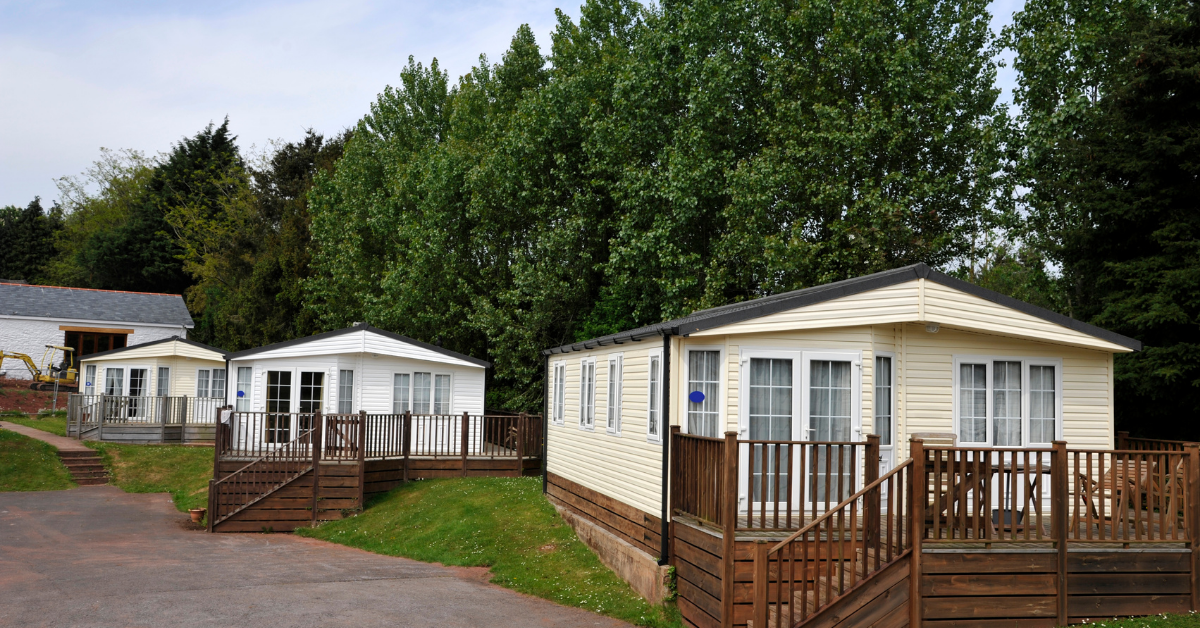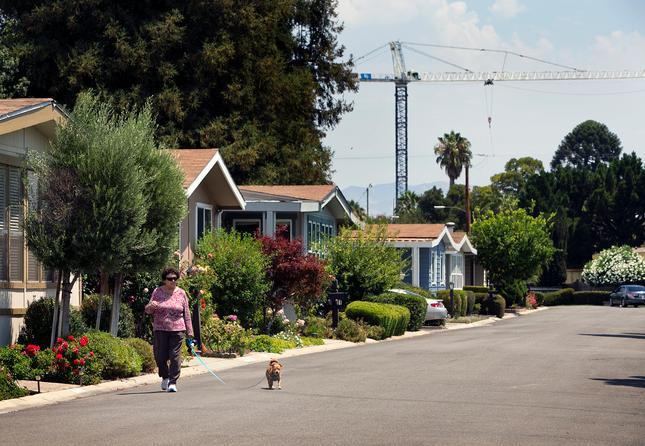
Mobilehomes are often a source of naturally affordable housing. Mobilehome park residents usually own their home, renting the land beneath it from the park operator. Mobilehome owners are uniquely vulnerable to displacement if there are large increases in space rent because of their limited ability to relocate. The number of mobilehome parks in Santa Clara County has decreased, limiting the opportunities to relocate, and it is prohibitively expensive to move a mobilehome. Space rent spikes also decrease the value of the home, because they make it less attractive to future buyers. As a result, mobilehome owners can lose a significant portion of their home equity when they are displaced as a result of a space rent increase.
Because of the unique vulnerability of mobilehome residents, mobilehome and RV parks are licensed and monitored by the State Department of Housing and Community Development (HCD).
Mobilehome Park Preservation
It has been several decades since any new mobilehome parks have been developed locally. In the ensuing years, many mobilehome parks that were originally developed in low-density areas, or in more industrial areas, are now surrounded by higher-density uses where the underlying land has increased in value. This has resulted in market demand to convert mobilehome parks to other uses.
In response, most cities with mobilehome parks have adopted ordinances to limit the ability to convert parks to other uses. When conversions are under consideration, park owners must comply with local ordinances that typically include stringent requirements for notifying the residents about hearings on proposed conversions. Park owners must also work with the city to prpeare relocation plans and proposed financial-benefit packages for residents who would be displaced by conversion.
In Santa Clara County, there are 17,115 spaces in mobilehome parks spread across nine cities. Six of those cities (Los Gatos, Milpitas, Morgan Hill, Palo Alto, San Jose, and Sunnyvale), with a total of 16,210 mobilehomes, have ordinances limiting the ability to convert parks from rental to ownership or to close the park and convert the property to an entirely new land use.
Mountain View, which has 1,129 mobilehomes, does not have such an ordinance; however to convert a mobilehome park, a rezoning would be necessary, and the City has tenant protection regulations that would apply to tenants displaced from mobilehome parks or other rental housing. Two cities with mobilehome parks (Campbell and Gilroy) do not have regulations that govern mobilehome park conversions.
Mobilehome Protections
Rent stabilization ordinances for mobile home park spaces- the land where a mobilehome sits- help decrease displacement risk to vulnerable residents and allow park owners to cover operating costs and still receive a return.
There are six cities in Santa Clara County with mobilehome park space rent stabilization ordinances: Gilroy, Los Gatos, Milpitas, Morgan Hill, Mountain View, and San Jose. Palo Alto, Campbell and Sunnyvale have mobilehomes, but do not have space rent stabilization ordinances for mobilehome parks.
In place of space rent stabilization, Sunnyvale and Campbell adopted a “Memorandum of Understanding (MOU)” which is a contract between the mobilehome residents and park owners to limit rent increases, but is not recognized as a city ordinance. Palo Alto’s only mobilehome park is owned by a non-profit developer that is committed to keeping space rents stable and affordable. In cities with ordinances, annual increases are capped and are tied to the Consumer Price Index (or a percentage of CPI) to provide a reasonable rate of return to landlords and to cover regular maintenance costs.
Existing Mobilehome Rent Stabilization Ordinances in Santa Clara County
| City | Allowed Annual Space Rent Increase | Maximum Increase (Cap) |
| Campbell (MOU) | 75% of CPI or 3%, whichever is greater | No cap |
| Gilroy | 80% of CPI | 5% |
| Los Gatos | 100% of CPI or 3%, whichever is greater | 5% |
| Mountain View | 60% of CPI | 5% |
| Milpitas | 50% of CPI | 5% |
| Morgan Hill | 75% of CPI | 8% |
| San Jose | 75% of CPI or 3%, whichever is greater | 7% |
| Sunnyvale (MOU) | 75% of CPI or 3% whichever is greater | No cap |
Vacancy Control in Mobile Home Parks
Since mobile home space rent stabilization is not limited by the Costa-Hawkins state law, jurisdictions are able to limit space rent increases when a mobilehome is sold, also known as applying vacancy control. Eight cities in Santa Clara County limit space rent increases when ownership changes.
| City | Allowed Annual Space Rent Increase on turnover |
| Campbell (MOU) | 15% or 10% depending on Base Rent |
| Gilroy | No limit on increases upon turnover |
| Los Gatos | Greater of $488.00 + 100% CPI or seller’s rent + $25.00 |
| Mountain View | 100% of CPI |
| Milpitas | No additional increase allowed |
| Morgan Hill | No additional increase allowed |
| San Jose | No additional increase allowed |
| Sunnyvale (MOU) | 5% before the 1st year, 10% after the 1st year, 15% after the 2nd year |
Additional Resources
- Updated Inventory, 2018
- County of Santa Clara: Mobilehome Park Inventory
- County of Santa Clara: RV Park Inventory
- State Housing and Community Development: Laws and Regulations
Photo by LiPo Ching/Bay Area News Group