…Or what I learned during my summer vacation.
Heart & Home is a monthly column by Josh Ishimatsu, Deputy Director of Strategy
Before my vacation to Japan this summer, housing policy nerd that I am, I did some rabbit-holing into Japanese housing policy. And so, this blog piece is about affordable housing in Japan, with some photos I took during my vacation (and, being the affordable housing nerd that I am, most of the photos I took during my vacation were of affordable housing). The bottom line here is that Japan is an example of what is possible if you combine pro-housing land use policies with larger-scale investment in affordable housing.
Housing is Cheaper in Tokyo than in Other Global Financial Centers
Housing is expensive to the point of crisis in almost all of the major world financial centers. However, of these major, industrialized cities, Tokyo is an outlier. Tokyo’s housing costs are relatively affordable. Housing rents at about $2 less per square foot than in the top tier of wealthy cities (the ranking is per the Global Financial Centres Index, which I had never heard of before, but I asked an AI to tell me what world cities would be considered world financial capitals. This is the index that the AI referenced, so it must be legit; also, I included LA in the table for reference):
| City (GFCI Rank) | Estimated Median Per SF Housing Rental Costs |
| New York City (#1) | $4.50 – $5.20 |
| London (#2) | $4.00 – $4.80 |
| Hong Kong (#3) | $5.00 – $6.10 |
| Singapore (#4) | $4.80 – $5.50 |
| San Francisco (#5) | $3.80 – $4.30 |
| … | … |
| Tokyo (#10) | $2.10 – $2.40 |
| Los Angeles (#12) | $3.20 – $3.70 |
2 Reasons Why Housing Is More Affordable in Japan
In Abundance/YIMBY spheres, there’s been lots of blogificating (see here, for e.g.) that credits Tokyo’s low housing costs to Japan’s land use/zoning policies. Japan has a simple (only 12 zones total), national (the national government sets land use policies, not local governments), non-Euclidian (housing is allowed in every zone except one) zoning system. It makes it easier to build dense, mixed-use housing. Which is a good thing.
AND, without detracting from the value of Japanese zoning policies, I want to highlight another reason why Japan has low housing costs – Japan invests heavily in affordable housing, especially public housing. In Japan, affordable housing (including both public housing and privately-owned, subsidized housing) is over 8% of households. In comparison, in California, affordable housing is roughly 3% of households. That is, Japan has proportionately over twice as much affordable housing as we do in California:
| Category | Japan | California |
| Land Area | 141k square miles | 156k square miles |
| Population | 122.4 million | 39.4 million |
| Households | ~50 million | ~15 million |
| Privately-owned Subsidized Housing | 2.0 million homes(4% of households) | 0.5 million homes(3% of households) |
| Public Housing | 2.2 million homes(over 4% of households) | 25k homes(0.2% of households) |
A couple interesting things to note about the table above:
- Japan and California have roughly the same land area, but Japan is way more densely populated than we are;
- Privately-owned affordable housing is roughly comparable in proportion to the total number of households;
- Japan has way more Public Housing than we do in CA. This is really where the strongest point of differentiation is in terms of the numbers of affordable homes.
Taken together – pro-housing land use policies and robust investment in affordable housing – these make a roadmap for what we can do better here in Silicon Valley/California/the US.
Photos from My Vacation
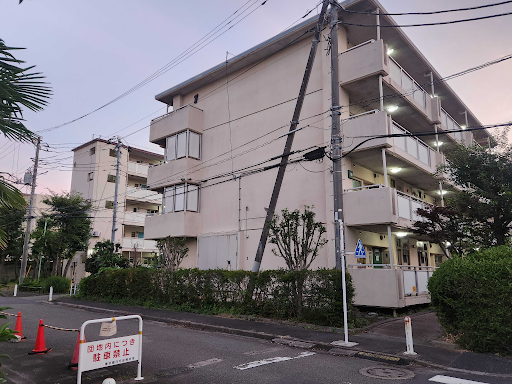
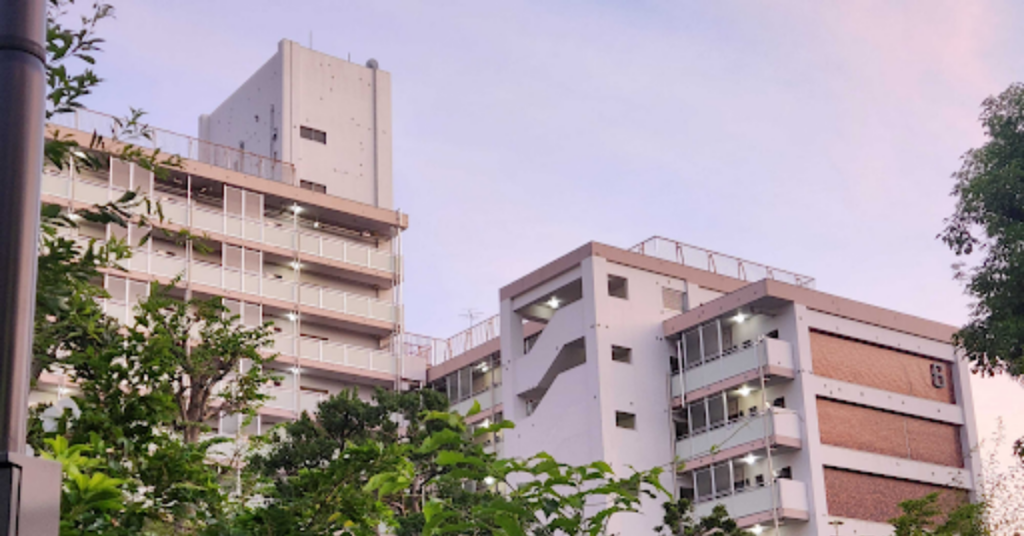
All of the photos below are of affordable housing from the same neighborhood where we had an Airbnb in Tokyo. Everything in our neighborhood was within 0.5 miles (probably less?) of the train station that we used every morning as the starting point for all our touristy wanderings. I think the first two pictures are of privately-owned/quasi-public housing and the third is public housing. But I didn’t do a good job (or any kind of job, really) noting which picture was of what – so I am relying on my somewhat unreliable memory to figure out which picture is of what.
Just a few personal observations to note:
- These are pretty massive complexes – hundreds and hundreds of homes – with very few parking spots. None of it was structured parking.
- Lots of bike racks with tons of bikes.
- Lots of playgrounds in courtyards between buildings. I didn’t take pictures of these because it feels creepy/invasive to take pictures of other people’s children.
- Buildings (even the newer ones) are pretty architecturally dull/institutional looking but seem well-maintained and well-used.