Written by Manuel Salazar, Housing Planning and Production Associate
SV@Home joined community land trust leaders, residents, funders, lenders, and housing partners from across California to learn more about what it takes to build and sustain community ownership.
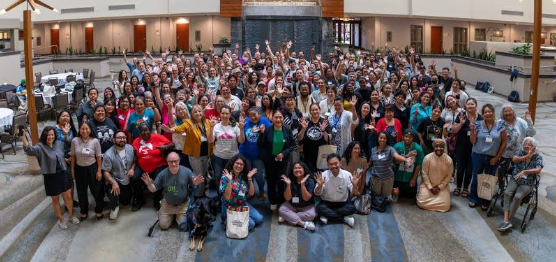
A few weeks ago, I had the opportunity to represent SV@Home at the 2026 California Community Land Trust Conference in San Francisco. Hosted by the California Community Land Trust Network, the two day conference brought together community land trusts (CLTs), residents, public agencies, lenders, funders, developers, and other partners from across the state to share what they’ve learned and strengthen the growing community ownership movement in California.
CLTs, housing cooperatives, and other shared ownership models offer an alternative approach to how we own and manage housing and land. The models work differently, but they are built around a similar idea: creating opportunities for residents and communities to have a greater role in owning the places where they live while keeping those homes affordable over the long term. In communities facing rising housing costs and displacement, these models offer another tool for preserving affordable homes and keeping land in community hands.
My opportunity to attend came in part through SV@Home’s work supporting South Bay Community Land Trust (SBCLT), which has also given me a closer look at what it takes to make community ownership work in practice. At the conference, I was able to learn from both established and emerging CLTs, residents, lenders, and other partners through sessions covering lending and underwriting, asset management, organizational sustainability, resident leadership, and long term stewardship.
The conversations made it clear that acquiring a property is only one piece of the work. CLTs also need the organizational capacity to manage financing, maintain properties, build reserves, meet public funding requirements, and plan for the long term operation of their properties. For smaller and emerging organizations, that can mean taking on a wide range of responsibilities with limited staff and resources. Throughout the conference, we heard about ways to address those challenges through more accessible financing, stronger relationships with public and private partners, shared staffing and resources, and greater collaboration between CLTs.
What I appreciated most was that even as the conversations became technical, they remained rooted in the communities this work is intended to serve. Financing, asset management, and organizational capacity are important because they help communities preserve affordable homes, prevent displacement, build resident leadership, and have a meaningful role in shaping the future of their neighborhoods.
I left the conference with a better understanding of the nuts and bolts needed to sustain community ownership, but also a greater appreciation for the people and organizations doing this work every day. Supporting community ownership means investing not only in individual properties, but also in the local organizations, relationships, and community leadership needed to steward those homes for the long term. As SV@Home continues working alongside SBCLT and other partners, I’m excited to bring these lessons back to our work and continue supporting community-led housing solutions here in Santa Clara County.
Learn more about community land trusts and the work happening across California through the California Community Land Trust Network. And be on the lookout for more from SV@Home as we continue exploring preservation strategies and alternative ownership models that can help keep homes affordable and communities rooted in place.