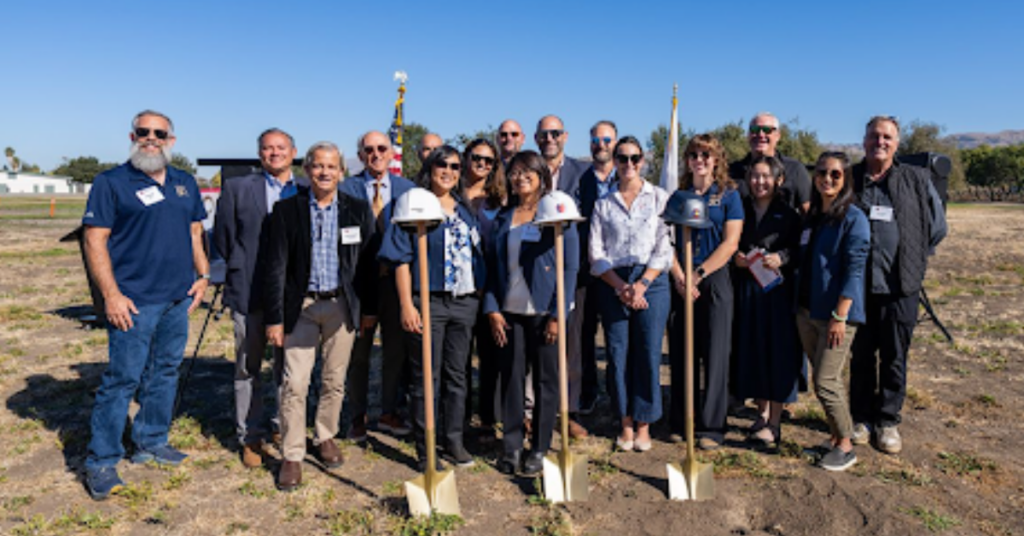
On October 16th, Alum Rock Union School District and SV@Home member CORE Builders celebrated the groundbreaking of 78 new affordable homes for teachers and school staff on excess land at an active middle school – a move that can help the district attract and retain a talented and invested workforce, while strengthening district finances. It took a trio of state laws to make this possible. As school districts continue to grapple with declining enrollment, cities need to ensure land use regulations do not create unnecessary barriers to community-serving uses.
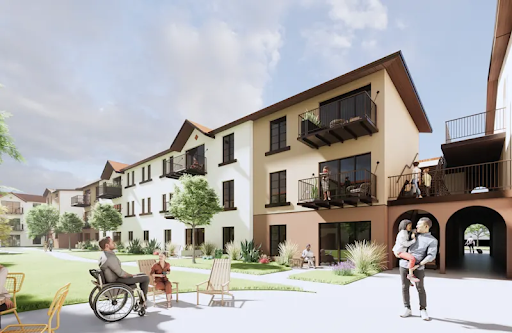
On October 16, Alum Rock Union School District (ARUSD) and SV@Home member CORE Builders celebrated a major milestone: the groundbreaking of the Mayfair Workforce Housing Project in East San José. The project will transform district-owned land into 78 below-market-rate apartments for teachers and school staff, helping address the region’s housing affordability crisis while supporting the district’s ability to recruit and retain educators. Half of the apartments are planned for lower-income households with rents projected to average 40% below market rate.
The project demonstrates what is possible when school districts can put their land to work for the people they serve. For educators struggling to afford housing near their jobs, it offers a chance to live closer to their school communities. For the district, it represents an investment in its workforce and a potential source of long-term financial sustainability amid rising costs and declining enrollment. It took a trio of state laws to make this possible: SB 1413 (Teacher Housing Act of 2016), AB 2295 (2022), and AB 1021 (2025). In most cities, including San Jose, school districts have few options available to both keep their land and use it to meet community needs, while strengthening district finances.
School districts using their excess land to benefit their communities
Notably, the Mayfair Workforce Housing Project is located on a large property where a middle school remains active. On another portion of the same property is the former MACSA site. Here the District administration and Mayfair Neighborhood Trust (the “Trust”), a community-led effort co-founded by SOMOS Mayfair and the School of Arts and Culture, are negotiating for the Trust to build a new community hub with valuable space for education, culture, sports, and community services in a historically underserved neighborhood. In San Jose, such developments can utilize land for schools along with affordable housing and community-serving facilities because most of the city’s schools are built on large lots, averaging almost 10 acres.
Across Santa Clara County, school districts are facing difficult decisions as enrollment declines, housing costs push families out of the region, and fixed operating expenses put pressure on district budgets. Underutilized and surplus properties could help districts respond- not only through educator housing, but also through uses such as childcare, health services, neighborhood amenities, affordable homes for families, and other community facilities. Thoughtful redevelopment can help districts sustain their finances while continuing to fulfill their educational missions.
SV@Home continues to work with partners to advocate for cities, including San Jose, to remove unnecessary land-use barriers and give school districts greater flexibility to determine how their properties can best serve their communities. Today, many uses that could support district finances and community needs are prohibited or require lengthy, costly approval processes, including some of the uses contemplated for the old MACSA site. Some uses require a special use permit, while housing proposals and other uses can face additional land-use hurdles.
SV@Home is working to connect school district leadership with the City and advocate together to expand the uses permitted on school and faith-owned properties, creating a clearer, more predictable path for affordable housing, public workforce housing, and other community-serving development. This flexibility would help districts retain ownership of valuable public assets, generate ongoing revenue, and respond to changing community needs. Otherwise, school districts face unnecessary obstacles that could push them toward selling land outright and losing ownership permanently.
The Mayfair groundbreaking is an encouraging example of what school districts can make possible with their land. With the right policies, more districts could explore creative solutions that strengthen their finances, sustain schools, support educators and families, and keep essential community resources rooted in the neighborhoods they serve.
Public land should be a resource for public good. SV@Home will continue advocating for policies that help school districts turn that principle into action.